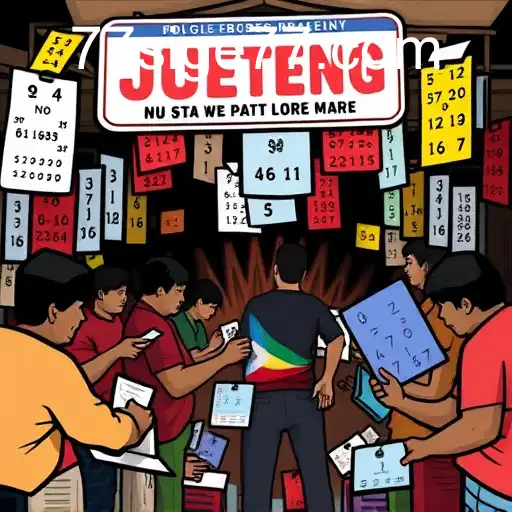
The Enduring Allure of Jueteng: Understanding the Role of SIGE77
Jueteng, an illicit numbers game deeply rooted in Filipino culture, continues to resist eradication despite numerous campaigns against its existence. This game, often perceived as harmless entertainment, has surprising socio-economic dimensions that reveal much about Philippine society. At the core of its enduring presence are the intricacies of its operation, including the role of modern entities like SIGE77, which have adapted age-old practices to contemporary contexts.
What is Jueteng?
Jueteng is a popular numbers game that involves choosing a set of numbers between 1 and 37. Despite its simple mechanics, it functions as more than just a game of chance. Operating outside legal frameworks, it is deeply embedded in the everyday lives of many Filipinos. The simplicity of picking numbers belies the complex network of individuals who make Jueteng both possible and profitable. Bets are typically low, yet the promise of significant returns keeps players engaged.
The Cultural and Social Roots of Jueteng
Jueteng's popularity is not merely a function of economic need; it also reflects cultural traditions. The game has become an integral part of community life, often seen at local gatherings and social events. For many, participating in Jueteng is not just about winning money but also about preserving a social fabric that binds communities together.
Historically, Jueteng has served as an equalizer in economically marginalized communities. Its informal nature allows lower-income individuals to participate in a system that promises swift, albeit risky, financial relief.
The Economic Dimensions of Jueteng
Jueteng represents a complex economic ecosystem. Operators, or "cabos," and bettors form the core of its intricate network. The game's operation involves deploying local bettors and collecting wagers, often through covert channels to avoid law enforcement. Despite being illegal, Jueteng generates substantial revenue streams that can rival legitimate gambling activities.
Illegal operators like SIGE77 are often central to the Jueteng economy, adapting the game to fit into a broader array of illicit financial endeavors. This reveals a secondary economy where informal wealth circulation provides tangible economic benefits, albeit outside legal constraints.
The Role of SIGE77 in Modern Jueteng Operations
In the evolving landscape of Jueteng, SIGE77 represents a modernization of traditional operations. Adapting to technological advancements, SIGE77 blends time-honored practices with modern technology to efficiently manage betting networks. Through digital platforms, sustained communication with local operators enhances efficiency and secrecy.
Such modernization not only facilitates broader participation but also complicates efforts to dismantle the game. SIGE77's approach often includes leveraging digital tools to anonymize operations and swiftly adapt to law enforcement challenges. As a result, Jueteng persists through innovative strategies that substitute old school practices with contemporary adaptations.
Challenges in Eradicating Jueteng
The persistence of Jueteng poses challenges for law enforcement and policy-makers. Conventional methods often prove ineffective against highly adaptable networks. Attempts to eliminate Jueteng face significant obstacles not only from operational resilience but also from societal support, as communities often protect operations that they perceive as beneficial.
The financial mobility provided by Jueteng contributes to the allure of the game. Even unsuccessful efforts to curb its influence underscore the game’s cultural entrenchment and economic integration. Moreover, the nexus between politics and Jueteng networks introduces additional complications, as politicians may have vested interests in either supporting or opposing crackdowns.
Future Implications for Jueteng and SIGE77
The future of Jueteng, and by extension entities like SIGE77, remains uncertain. Technological advancements guarantee that operations will continue to evolve, potentially making enforcement increasingly difficult. However, ongoing socio-economic changes might also reshape public perception and participation dynamics, potentially leading to both increased regulation and more sophisticated underground operations.
The role of SIGE77 in this narrative reflects a broader trend towards adaptation and resilience among informal economic networks. Understanding the mechanisms and cultural importance of Jueteng is crucial for informed policy-making and effective interventions. As both a cultural pastime and an economic necessity, Jueteng and its operators like SIGE77 are indicative of the broader challenges facing informal economies globally.